
Warehousing used to be this pretty straightforward thing. Trucks arrive, stuff goes on shelves, pickers grab it, trucks leave again. And yeah, that still happens.
But if you have ever stood on a warehouse floor at 4:30pm while orders are stacking up and one conveyor lane is jammed and someone is asking where a pallet even went… you know the truth. Warehouses are living systems. Tiny problems turn into late shipments fast.
This is where “digital twins” get interesting. Not as a buzzword. More like a super practical way to stop guessing.
Here’s the simplest way I can explain it.
A digital twin is basically SimCity for your warehouse.
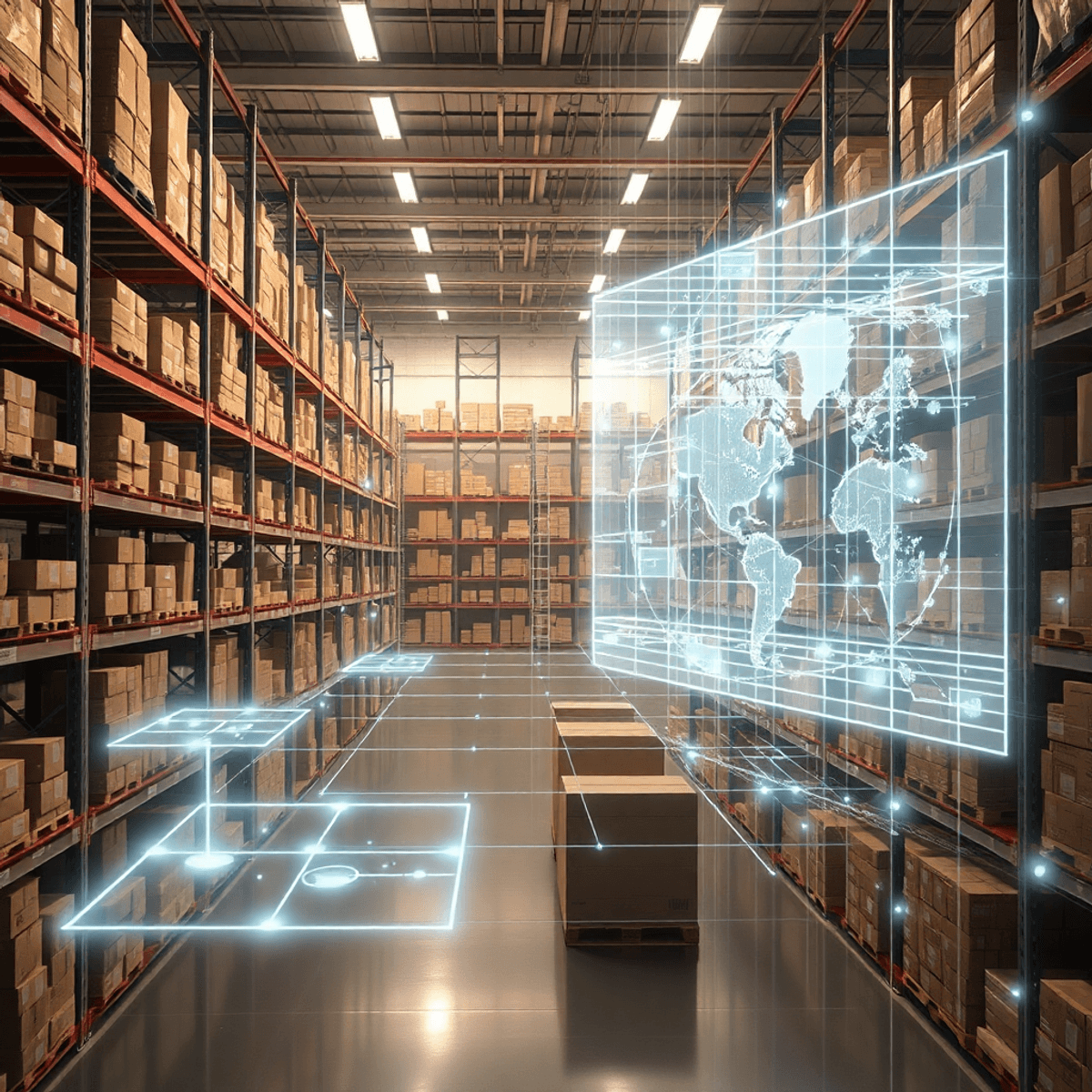
Not a cute 3D toy. A working digital map that mirrors the real building, the real inventory, the real people, and the real machines, so you can see where things are stuck. And more importantly, you can predict where they’re about to get stuck.
Think SimCity. But the citizens are pallets and orders.
In SimCity, you build roads, zones, power lines. And if you mess up traffic flow, you don’t need a lecture. You literally see cars piling up at an intersection. Then you fix it. Add a road. Change the lights. Reroute.
A warehouse digital twin works the same way:
- The “roads” are your aisles, conveyor belts, dock doors, pick paths, and staging lanes.
- The “buildings” are racks, bins, cold storage, value add stations, packing lines.
- The “citizens” are orders, cartons, pallets, forklifts, pickers, robots.
- The “weather” is your real world chaos. Late trucks. labor shortages. rush orders. broken scanners.
And the digital twin is the map that updates as the city moves.
So instead of hearing “shipping is behind”, you can open the twin and see the exact choke point. Like, literally, Dock Door 7 is blocked because inbound pallets are sitting in a staging lane that was supposed to be cleared by 2pm, which then forced replenishment to wait, which then slowed picking, which then delayed packing, which then missed the truck cut off.
That kind of visibility changes everything.
So what is a digital twin, in plain warehouse terms?
A digital twin is a live model of your warehouse that stays synced with what is actually happening.
Not just a static layout drawing. Not just a spreadsheet. Not just a dashboard with KPIs.
It is a digital version of your operation that knows:
- where items are (not “somewhere in Zone B”, but where they are in the flow)
- what equipment is doing (running, idle, jammed, under speed)
- what people are doing (work queues, travel time, workload imbalance)
- what orders are doing (waiting, picked, packed, staged, loaded)
- what trucks are doing (arrived, unloading, delayed, not yet checked in)
It pulls signals from things you already have, usually a mix of WMS, WES, TMS, ERP, scanners, RFID, conveyor sensors, AMR systems, yard management, and even manual inputs when needed.
Then it turns all that into one “SimCity screen” where you can watch the flow and test changes before you do them in real life.
The “digital map” part: seeing where things are stuck
Most warehouses have data. The problem is the data is scattered and late and kind of argumentative. WMS says the order is picked. Packing says they never received it. Forklift driver says it’s on a pallet somewhere. Everyone’s technically right, which is the worst kind of right.
A good digital twin is like a shared truth.
You can look at the map and spot:
1) Congestion zones
The twin shows heat. Where travel paths are overloaded, where pickers are colliding, where forklifts are waiting, where robots are queuing.
In SimCity, traffic backs up at one bridge. In a warehouse, it backs up at one cross aisle or one narrow lane near packing.
2) Work in progress piles
You know those areas where cartons mysteriously gather? Induction points. QA hold zones. rework tables. packing overflow.
The twin makes those piles visible as inventory that is not progressing. It’s not “lost”, it’s stuck.
3) Equipment bottlenecks
Conveyors running under speed. Sorters hitting capacity. printers failing. stretch wrapper down.
Instead of “why is outbound slow”, you see “Lane 3 is jammed every 18 minutes, which is pushing 40 percent of volume to manual.”
4) Dock door imbalance
Door 2 is drowning, Door 9 is empty. Inbound is early, outbound is late. yard is stacked.
A twin can show door utilization and staging pressure in a way that’s obvious in seconds.
And here’s the key. Seeing where things are stuck is not just for troubleshooting. That’s step one. Step two is prediction.
The prediction part: how digital twins help you predict deliveries
Predicting deliveries sounds like a fancy “AI thing”, but it’s basically this:
If the twin knows what is happening right now, and it knows the normal time it takes for items and orders to move through each step, it can estimate when an order will actually ship.
Not when it is supposed to ship. When it will ship.
And that feeds into delivery prediction, because shipment timing is half the battle. If you can reliably predict “this truck is going to leave 52 minutes late”, you can update ETAs, adjust carrier plans, prioritize the right orders, and stop sending fake confidence to customers.
A digital twin predicts deliveries by modeling constraints, like:
- pick capacity in the next 4 hours
- packing station throughput
- conveyor and sorter saturation
- replenishment risk (fast movers about to stock out)
- trailer availability
- yard congestion and dock door timing
- labor gaps by shift and by function
Then it runs scenarios. Again, very SimCity.
“What if I reroute wave picking to batch picking for this SKU group?”
“What if I move 2 people from putaway to packing for the last 90 minutes?”
“What if we open one extra dock door and stage differently?”
“What if we push these orders to a later truck and protect the premium ones?”
The twin can’t magically create capacity. But it can tell you the least painful way to use what you have.
A quick example (the kind that happens constantly)
Let’s say you promise next day delivery on 1,200 orders.
At 11am, everything looks fine on paper.
But the digital twin shows something else:
- inbound trailer is 45 minutes late
- those pallets contain 3 SKUs that feed 420 of the 1,200 orders
- replenishment for those SKUs is scheduled, but the staging lane is full
- putaway is behind, so replenishment tasks are not being created fast enough
- picking is about to hit a wall at 1pm, not 4pm
If you know that at 11am, you can do something. You can pre emptively:
- prioritize those inbound pallets to cross dock or hot putaway
- reassign labor for 90 minutes
- push non urgent putaway back
- split waves so you don’t flood packing later
- communicate a realistic cutoff time to customer service
Without the twin, you find out at 3:30pm. When you’re already late. And everyone is sprinting and making mistakes.
What a “good” digital twin actually needs (so it’s not just a pretty screen)
This part matters. Because some “digital twin” projects are just expensive mirrors. They show what happened. Not what is happening. And definitely not what will happen.
If you’re evaluating this, you want a twin that can do a few things well:
Live data that’s close to real time
Not yesterday’s report. Not a 30 minute lag that hides jams until they’re painful.
Process level visibility, not just inventory locations
Knowing an item is in “Zone C” isn’t enough. Is it in active pick? In QA hold? In packing WIP? On a trailer?
A flow model with time assumptions
The twin should know typical cycle times. And adjust them when reality changes. Peak season is not the same as a random Tuesday.
Scenario testing
If you can’t try “what if we do X” before you do it, you’re missing the whole SimCity superpower.
Alerts that point to causes, not noise
You don’t need 80 notifications. You need 3 that matter, like: “Outbound will miss Truck A unless packing throughput increases by 12 percent in the next 2 hours.”
The part people don’t say out loud
Digital twins don’t replace warehouse managers. They replace the guessing.
Most operations already have smart people. What they don’t have is one shared map that shows the whole city at once.
And once you have that map, predicting deliveries becomes less like fortune telling and more like… basic navigation. You stop driving by vibes.
Wrapping it up
If you take nothing else from this, take this:
A warehouse digital twin is a SimCity style digital map of your warehouse that tells you where things are stuck.
And because it can see the jams forming in real time, it can predict the downstream impact. Which orders ship late. Which trucks miss cutoff. Which deliveries slip. And what small changes can pull you back on track.
It’s not magic. It’s just visibility plus simulation.
The warehouse still has to do the work. But at least you’re not doing it blind.
FAQs (Frequently Asked Questions)
What is a digital twin in the context of warehousing?
A digital twin in warehousing is a live, synchronized digital model of your warehouse operation. It mirrors the real building, inventory, people, and machines, providing real-time visibility into where items are, what equipment and staff are doing, and how orders and trucks are moving. Unlike static layouts or dashboards, it acts like a ‘SimCity’ for your warehouse, showing exactly where flow issues or bottlenecks occur.
How does a warehouse digital twin help identify operational problems?
A warehouse digital twin visualizes congestion zones, work-in-progress piles, equipment bottlenecks, and dock door imbalances by mapping aisles, conveyors, racks, pick paths, and more. It highlights areas where pallets or orders get stuck, equipment slows down or jams occur, and helps pinpoint exact choke points causing delays—turning scattered and delayed data into one shared truth for troubleshooting.
Can a digital twin predict delivery delays in warehouse operations?
Yes. By continuously tracking current warehouse activities and knowing typical processing times for picking, packing, replenishment, and loading steps, a digital twin estimates actual shipment times—not just scheduled ones. This allows you to predict delivery delays accurately, update ETAs proactively, adjust carrier plans accordingly, and prioritize orders effectively to improve customer communication.
What kinds of data sources feed into a warehouse digital twin?
A warehouse digital twin integrates signals from existing systems like Warehouse Management Systems (WMS), Warehouse Execution Systems (WES), Transportation Management Systems (TMS), Enterprise Resource Planning (ERP), scanners, RFID tags, conveyor sensors, Autonomous Mobile Robots (AMR) systems, yard management tools, and manual inputs when necessary to create an up-to-date operational map.
How does thinking of a warehouse as a ‘living system’ help improve operations?
Viewing a warehouse as a living system acknowledges that tiny problems can quickly cascade into major delays due to interdependent processes involving people, machines, inventory flows, and external factors like labor shortages or late trucks. Using tools like digital twins lets you see these dynamic interactions in real time so you can identify issues early and test solutions before implementing them on the floor.
What practical benefits can warehouses expect from implementing digital twins?
Implementing digital twins provides warehouses with enhanced visibility into real-time operations leading to faster problem identification and resolution. It enables predictive insights for shipment timing and resource allocation to prevent bottlenecks. Ultimately this reduces late shipments, improves labor productivity by balancing workloads better, optimizes equipment utilization, enhances customer satisfaction through accurate ETAs, and supports informed decision-making based on shared operational truths.