
But under the surface, remote work is built on trust. And that is exactly why it breaks so easily.
Because the moment you are not in the same building, you lose a bunch of invisible safety nets. You cannot casually glance at who is in a meeting room. You cannot overhear that a deadline moved. You cannot walk to someone’s desk and confirm what they meant by “ship it today.”
So you replace all that with messages, links, shared docs, and tools that talk to each other. And in that world, one principle quietly becomes the difference between smooth weeks and total chaos:
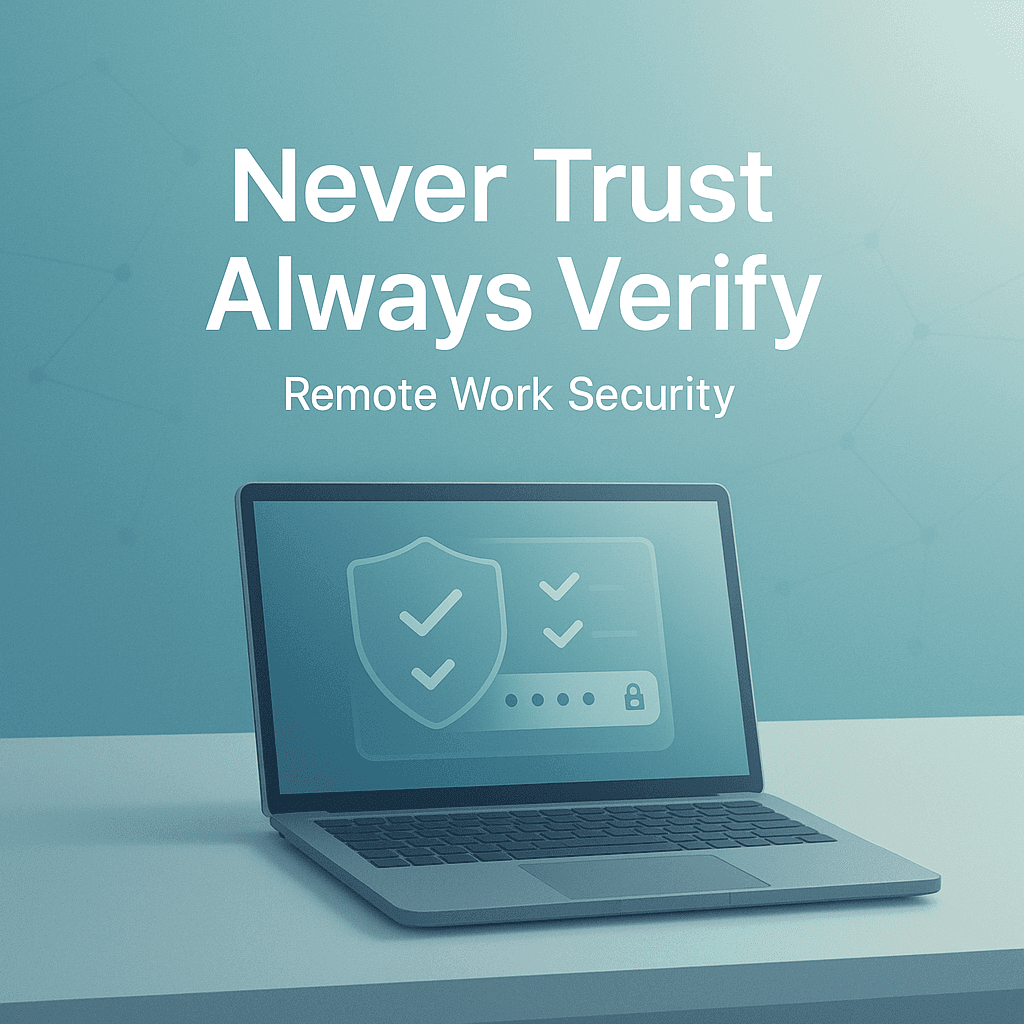
Never trust, always verify.
Not in a paranoid way. Not in a cynical way. In a professional, keep the wheels on the road kind of way.
Remote work is basically working through fog
Here is the simplest way I can explain it.
In an office, you are driving on a clear day. You can see traffic. You can see signs. You can see what other people are doing.
Remote work is driving in fog. You can still get where you are going, but you need headlights, you need to slow down a bit, and you need to check your mirrors more often. You do not assume the road is empty just because you cannot see a car right now.
Verification is those headlights.
What “never trust” actually means (and what it does not)
This phrase scares people because it sounds like you think everyone is lying.
It is not that.
It means you do not treat information as true just because it arrived in your inbox, Slack, or calendar. You treat it as a claim until you confirm it.
A quick example.
Someone messages: “Hey, can you wire this payment today? Same vendor as last time. Here is the invoice.”
In an office, you might recognize the person, the vendor, the vibe. Remote, it is just pixels. Names can be spoofed. Accounts can get hijacked. Context can be faked. And people are busy.
So “never trust” means: do not act on it yet. Verify it through a separate, known-safe path.
The remote work threats nobody likes to talk about
A lot of remote problems are not dramatic. They are boring. That is why they get you.
1. Identity confusion
You think you are talking to your manager. But it is a lookalike email. Or a compromised account. Or a fake Zoom link.
A technical term you might hear is spoofing. Think of it like a counterfeit uniform. If someone wears a convincing security guard outfit, you might let them in. Online, the “outfit” is an email address and a display name.
Verification is checking their badge against the official roster, not the outfit.
2. Link and file landmines
“Open this doc.” “Review this PDF.” “Sign this.”
Sometimes it is normal. Sometimes it is a trap.
Another technical term is phishing. Simple analogy. It is like someone leaving a fake package at your door with a note that says “open immediately.” The goal is not the package. The goal is that you open it.
Verification is asking: did I expect a package today, and does it match what I normally receive?
3. Silent process drift
Remote teams change tools, tweak workflows, update policies. Often with good intentions. But changes spread unevenly.
One person works from the old checklist. Another uses the new one. Then something breaks and nobody knows why.
Verification here is less about security and more about reality checking. Which version are we using. What is the current definition of done. Who owns the next step.
What “always verify” looks like in real remote life
This is the part people overcomplicate. Verification is usually small, quick, and repeatable.
Verify people through a second channel
If something involves money, access, or deadlines, confirm it outside the original message.
If the request came via email, verify in Slack. If it came via Slack, verify by a quick call. If it came in a call, verify in the ticket or doc.
The analogy is a door and a peephole. Someone can knock and say anything. You still look.
Verify links before you click
You do not need to become a cybersecurity expert. You just need habits.
- Hover over links and read the real destination.
- If a login page appears unexpectedly, stop. Go to the site manually instead.
- Download files only from systems you already use.
If it feels rushed, emotional, or weirdly urgent, that is a smell. Remote scams often lean on urgency because urgency kills verification.
Verify tasks against a source of truth
Every remote team needs one place where “the truth” lives.
Call it a ticketing system, a project board, a shared doc, whatever. But pick it.
If someone says, “We agreed on Friday,” the response is not a debate. It is: “Cool, can you link me to where that is captured?”
Not because you do not trust them. Because you do not trust memory. Yours included.
Verify expectations in writing
Remote work punishes ambiguity.
If you think “send the draft” means a polished doc, but they meant bullet points, that is not a character flaw. That is a communication gap.
So you verify by summarizing:
“Just confirming. You want a 1 page draft with headings by 3 pm, not final copy. I will drop it in the doc and tag you.”
That one message saves hours.
The hidden benefit: verification reduces stress
A lot of remote stress comes from carrying invisible uncertainty.
Did I misunderstand. Did they mean today. Is this the latest file. Am I blocked. Did I miss a message. Is this safe.
Verification turns vague anxiety into concrete steps. It gives you a small checklist when your brain wants to spiral.
And it also builds trust, ironically. Because when your team sees that you consistently confirm details and close loops, they start relying on you. You become the person who does not drop balls.
A simple verification checklist you can actually use
Nothing fancy. Just a few defaults.
- Money or access? Verify in a second channel.
- New link or file? Confirm you expected it, and confirm the source.
- Deadline or scope? Confirm in writing and point to the source of truth.
- Meeting invite changes? Verify the organizer and the domain. If unsure, ask.
- “Quick favor” requests? Slow down. Urgency is where mistakes happen.
If you do just this, you will prevent most remote disasters.
The mindset shift that makes remote work sustainable
Remote work rewards adults. People who do not need hand-holding, but also do not freeload on assumptions.
“Never trust, always verify” is basically saying: I will be friendly, fast, and helpful. But I will not be casual with reality.
I will not click first and think later. I will not ship based on a vague message. I will not move money because a name in my inbox told me to.
I will verify.
Because remote work is driving in fog. And this is how you keep the car on the road, even when you cannot see very far ahead.
FAQs (Frequently Asked Questions)
Why is trust so crucial in remote work environments?
Trust forms the foundation of remote work because team members are not physically present together, which means many informal cues and safety nets like overhearing conversations or quick desk chats disappear. Without trust, communication and collaboration can easily break down, making verification essential to maintain smooth workflows.
What does the principle ‘Never trust, always verify’ mean in remote work?
In remote work, ‘Never trust, always verify’ means treating all information—whether from email, Slack, or calendar—as claims that need confirmation before acting on them. This isn’t about paranoia but about professionally ensuring accuracy and security by verifying requests through separate, known-safe channels.
What are common security threats unique to remote work?
Remote work introduces threats like identity confusion (spoofing), where attackers impersonate colleagues via fake emails or accounts; link and file landmines (phishing), where malicious links or files are disguised as legitimate; and silent process drift, where uneven adoption of updated workflows causes confusion and errors.
How can remote workers effectively verify people and information?
Verification can be simple and quick: confirm important requests through a second communication channel (e.g., if you get an email request, verify via Slack or a call), hover over links before clicking to check destinations, avoid unexpected login prompts by navigating directly to sites, and cross-check tasks against a shared source of truth like a project board or ticketing system.
Why is verifying expectations in writing important for remote teams?
Written verification reduces ambiguity by ensuring everyone shares the same understanding of tasks and deadlines. Summarizing agreements in messages clarifies deliverables—such as specifying that a draft should be one page with headings by 3 pm—not only preventing miscommunication but also saving time and frustration.
How does regular verification reduce stress in remote work settings?
Verification transforms vague uncertainties—like wondering if you misunderstood instructions or missed updates—into clear, actionable steps. This reduces anxiety by providing a checklist to follow and builds trust within the team as consistent confirmation shows reliability and closes communication loops effectively.