
Cloud security in 2026 is funny in the worst way. Every cloud provider is “secure”, their marketing pages are a fortress, their compliance badges look like a NASCAR suit.
And yet.
Breaches keep happening. Weird exposures. Ransomware. Token theft. Somebody accidentally made a storage bucket public again. Or a contractor got admin “just for a week” and it quietly stayed that way for eight months.
Most cloud incidents are not because AWS, Azure, or GCP are insecure. They are usually because we built something insecure on top of them. Misconfigurations. Identity sprawl. Weak change control. Stuff moving too fast to review, and nobody wants to be the person who slows releases.
Your cloud provider secures the cloud: data center buildings, physical servers, core networking, managed service infrastructure, and the underlying virtualization layer. You secure what you put in the cloud: your identities and permissions, your data, your network exposure, your workloads, your apps, your configurations, your logging, and your incident response plan. If you can configure it, you probably own the risk.
For this article, “cloud security” means: identity, data, network, workloads, apps, posture management, monitoring, incident response, and recovery. The full loop. Not just “do we have a WAF”.
And the 2026 reality is that everything is bigger and faster. Multi cloud plus SaaS plus remote access plus third party integrations plus AI driven automation in CI/CD. More speed, more surface area, and when something goes wrong the blast radius is brutal.
This post is meant to be practical. A modern model that actually works now, the minimum baseline for each area, and what to do if you want to level up. Also a reference stack you can steal.
Why cloud security in 2026 feels harder (even if your cloud provider is “secure”)
A lot of teams are still mentally living in the old world where you defend a perimeter, patch servers monthly, and if the firewall rules look decent you can sleep.
Cloud flips that.
Infrastructure is API-first now. Permissions are code. Workloads are ephemeral. Your “network” is basically a set of routing decisions and identity checks that can change ten times a day. And your biggest risk is often a human clicking “Allow” in the wrong admin panel.
Also, the idea that “we’re on AWS so we’re safe” is like saying “we bought a good safe, so our house can’t be robbed”. If you leave the safe open, or give everyone the code, or put it in the front yard, that is on you.
Here’s what you should expect by the end of this article:
- The threats that matter most in 2026, ranked by impact.
- A six-pillar security model that maps to prevent, detect, respond, recover.
- A minimum viable cloud security stack (the stuff that covers 80 percent of problems).
- Common mistakes I still see and the fix for each.
What’s changed since “classic” cloud security (and what still doesn’t work)
Perimeter-only thinking breaks in cloud because the perimeter is a shape-shifter.
- Workloads spin up and down. IPs change. Services appear behind APIs.
- East-west traffic (service to service inside your cloud) is where attackers live once they get in.
- The control plane is now a primary target. If someone can call your cloud APIs as you, they can do almost anything.
“We have a firewall + antivirus” is not a cloud strategy. It’s not even wrong, it’s just incomplete.
A quick translation, because this is where a lot of teams get stuck:
- Old firewall at the edge → Security groups, NACLs, private endpoints, WAF, egress control
- Antivirus on servers → Image hardening, EDR/runtime detection for VMs and containers
- Vulnerability scans once a quarter → Continuous scanning in CI plus runtime prioritization
- Manual change review tickets → Policy as code in pipelines plus drift detection
New common failure modes in 2026 are painfully consistent:
- Over-permissioned identities (human and non-human).
- Exposed storage (object storage, snapshots, backups).
- Public endpoints that nobody remembers exist.
- Leaky CI/CD secrets (tokens in logs, keys in repos, overly powerful build runners).
- Insecure Kubernetes defaults (or “it works, ship it” manifests).
The operational shift is the real story. Security has to be codified, continuously evaluated, and enforced with automation. If your controls depend on someone remembering a checklist at 2am, it will fail.
Also, quick callout because it matters.
Compliance is not security. Passing an audit means you met a minimum bar at a point in time, often scoped to what the auditor looked at. You can be compliant and still have an exposed admin API, a public bucket, and a service account key that never expires.
The cloud security threats that actually matter in 2026 (ranked by real-world impact)
This is not an exhaustive threat list. This is what tends to cause real damage. Money loss, data loss, prolonged outages, brand mess.
1) Identity compromise (the main plot in 2026)
If an attacker gets your identity or your token, they do not need to “hack” anything. They log in.
Common patterns:
- Stolen tokens from developer machines.
- MFA fatigue attacks and push bombing.
- OAuth abuse (malicious app consent, hijacked SaaS sessions).
- Service account key leakage in CI systems or third party tools.
Affected domains: data security, cloud server security, network security, everything. Identity is the skeleton key.
2) Misconfiguration and exposure
The classics still work because we still mess them up:
- Public buckets.
- Overly permissive security groups or firewall rules.
- Admin ports exposed to the internet.
- Internet-facing services that were meant to be internal.
Affected domains: data security and cloud network security, plus incident response because you often do not notice until it’s too late.
3) API and control-plane attacks
Attackers love the control plane. It’s where you can do high-leverage damage fast.
- Abused cloud APIs using stolen credentials.
- Privilege escalation paths via mis-scoped roles.
- Metadata service access (often via SSRF).
- Token theft and lateral movement using instance profiles or workload identity.
Affected domains: cloud server security, posture, identity.
4) Insider risk and accidental admin
Not always malicious. Often just messy.
- Contractors given broad access.
- Shadow cloud projects in a personal account.
- Shared accounts that nobody wants to untangle.
- “Temporary” admin for troubleshooting.
Affected domains: identity and data, and then compliance gets dragged into it too.
If you take one thing from this section, it’s that 2026 cloud security is mostly about controlling identity and reducing blast radius when identity fails.
What actually works now: a practical cloud security model (six pillars)

These six pillars are the model. They map cleanly to outcomes.
- Prevent: identity hardening, exposure hygiene, secure defaults
- Detect: logs, anomaly detection, runtime signals
- Respond: automated containment, playbooks
- Recover: backups, rebuilds, tested restores
Each pillar below includes:
- Minimum baseline: the smallest set that meaningfully reduces risk.
- Level up: what to do when you want stronger assurance.
If you are a small team, you do not need an enterprise tool for every pillar on day one. You do need the baseline. Enterprises should standardize these across accounts and business units, with ownership per control so it doesn’t become “everyone’s job” which means nobody’s job.
Pillar 1: Identity-first security (IAM, MFA, least privilege)
Default stance in 2026: assume identities will be targeted. Design around that assumption.
Minimum baseline
- Enforce phishing-resistant MFA for admins. FIDO2 keys, passkeys, or certificate-based auth. Avoid SMS. Avoid push-only if you can.
- Eliminate shared accounts and lock down root or break-glass accounts. Store break-glass credentials offline, with monitoring on usage.
- Kill long-lived access keys where possible. If you must use them, rotate aggressively and alert on creation.
- Use least privilege for humans. Separate admin roles from day-to-day roles.
- Require SSO for human access. Central identity provider, strong device posture where possible.
Protect non-human identities This is where teams lose the plot. Service accounts and workloads often have the wildest permissions.
- Prefer workload identity and short-lived tokens over static secrets.
- Scope service accounts tightly. One workload, one role, minimal permissions.
- Rotate secrets. Put them in a proper secret manager, not environment variables in a repo.
- Limit where tokens can be used from. Network restrictions, audience restrictions, resource conditions if your cloud supports it.
Detect identity anomalies
- Impossible travel and unusual login patterns.
- Unusual API calls for a user or role (new regions, new services, large spikes).
- Privilege escalation attempts (policy attachments, role assumptions, new keys).
Practical tip Start with the top 10 users/roles by privilege and reduce from there. Most environments have a tiny set of identities that can do catastrophic damage. Fix those first.
Pillar 2: Data security in cloud computing (classification, encryption, keys)
You cannot protect data you cannot find. And in 2026 data lives everywhere. Object storage, databases, data warehouses, SaaS drives, ticketing systems, observability tools, AI assistants that ingest docs.
Minimum baseline
- Data discovery and classification: identify where sensitive data lives and who touches it. Even a simple 3-tier classification helps (public, internal, sensitive).
- Encrypt at rest and in transit everywhere. No exceptions because it’s “internal-only”.
- Centralize key management. Separate key admin from data admin when possible.
- Lock down data access with least privilege, not network location alone.
Data access controls
- Use row/column-level security in databases where it matters.
- Scope analytics tools. BI platforms and notebooks often become quiet exfil paths.
- Audit access to high-value datasets. If you do not know who queried it, that’s a problem.
Backups and immutability This is the part everyone claims is done, but it’s usually half-done.
- Enable versioning where it makes sense.
- Use object lock/WORM for critical backups and logs.
- Keep backups in isolated accounts/projects with separate admin paths.
- Test restores on a schedule. Not once a year. Actually scheduled.
DLP where it matters DLP is not a magic wand, but it’s useful when targeted.
- Prevent accidental sharing from SaaS drives and email.
- Monitor object storage for public exposure and mass downloads.
- Alert on sensitive data leaving via unusual channels.
Pillar 3: Cloud network security without the old perimeter mindset
The goal is not to build a bigger wall. The goal is to reduce exposure and limit lateral movement.
Minimum baseline
- Default-deny inbound. Open only what must be open.
- Minimize public IPs. Prefer private endpoints and internal load balancers.
- Restrict admin ports (SSH/RDP) hard. Ideally no direct inbound at all. Use bastions, just-in-time access, or managed session tooling.
- Segment critical systems. Databases should not be reachable from random subnets just because “it’s private”.
Secure connectivity
- VPN vs private links: use private links/direct connect equivalents for predictable, sensitive traffic. VPNs are fine for some use cases but tend to sprawl.
- Protect DNS. Log it. Block known bad. Use internal DNS policies.
- Egress controls matter. If an attacker gets in, egress control can stop data leaving unexpectedly. Start with allowlists for critical workloads, or at least alert on new egress destinations.
WAF and DDoS
- WAF helps with common web attacks and bad bots, and it buys you time. It does not fix broken auth or insecure APIs.
- DDoS protection is worth it for public apps, but you still need sane rate limiting at the app layer.
- Tune rules to your app. Default WAF configs often generate noise and blind spots.
Logging for network visibility
- Flow logs (VPC/VNet), DNS logs, load balancer logs.
- Centralize them. Retain them. Make them searchable. If you cannot answer “what talked to this database at 3am”, you are going to have a bad incident.
Pillar 4: Cloud server security (VMs, containers, Kubernetes)
Treat servers as disposable. That mindset fixes a lot.
Minimum baseline
- Immutable images: golden AMIs or base images. Rebuild, do not patch-in-place when you can.
- CIS benchmarks or hardened baselines. At least for internet-facing and high-value workloads.
- Disable password logins. Use keys or identity-based access.
- Restrict SSH/RDP. Better, remove it from the internet entirely.
- Host firewall rules, minimal open ports, minimal packages.
Kubernetes essentials Kubernetes is powerful. It also happily lets you create dangerous setups if you do not force guardrails.
- RBAC least privilege. No cluster-admin for convenience.
- Network policies. Default deny between namespaces where feasible.
- Admission controls: block privileged containers, hostPath mounts, and risky capabilities unless explicitly approved.
- Secrets handling: do not store plaintext secrets in manifests. Use external secrets operators or secret managers.
- Encrypt etcd. And protect access to it like it’s production crown jewels. Because it is.
Runtime detection
- Suspicious processes, unexpected binaries.
- Crypto-mining indicators (CPU spikes, known mining pools).
- Unusual outbound traffic from workloads. This is where EDR for cloud workloads or container runtime security earns its keep, if you tune it.
Vulnerability management that works Stop drowning in CVEs.
Prioritize:
- internet-facing workloads
- exploitable vulnerabilities
- vulnerabilities in used packages (not dead code)
- things with known active exploitation
Everything else can be backlog, especially if your images rebuild frequently and you have compensating controls.
Pillar 5: Posture management and security as code (stop repeating mistakes)
Manual reviews fail in fast cloud environments because humans are not built for “hundreds of changes a day”.
You need guardrails that run automatically.
Minimum baseline
- IaC guardrails: policy-as-code, pre-commit checks, CI pipeline scanning.
- Enforced templates or modules for common infrastructure (storage, networking, IAM roles).
- Continuous posture scanning for misconfigurations: public exposure, overly broad IAM, logging disabled, encryption off.
Drift detection
- Spot changes made outside IaC.
- Auto-remediate where safe (like removing public access) or open a ticket with clear ownership. Drift is how you end up with “we swear we fixed that” and then it comes back.
Standardized landing zones
For serious environments, a landing zone is non-negotiable:
- Accounts/subscriptions/projects structure
- central logging
- baseline networking
- identity integration
- baseline policies and guardrails
Exception handling
Exceptions happen. But they must be:
- time-bound
- approved by an owner
- documented with compensating controls
- auditable
Otherwise exceptions become the real architecture.
Pillar 6: Detection, response, and recovery (because prevention won’t be perfect)
If you only do prevention, you are betting your company on perfection. It’s a rough bet.
Minimum baseline
- Centralize logs: control-plane events, identity logs, network flow logs, workload logs. Put them into a SIEM or a log platform with detection.
- Focus alerts on high-signal events:
- new admin granted
- new access keys created
- mass downloads from object storage
- policy changes
- public exposure events
- suspicious role assumptions
- Create response playbooks. Not a giant PDF. Simple steps. Who does what. How to contain.
Automated containment
This is where modern teams win time.
- Disable access keys, revoke tokens, force re-auth
- Quarantine an instance or isolate a namespace
- Block egress to suspicious destinations
- Rotate secrets quickly
Forensics basics
- Preserve snapshots and logs.
- Maintain chain-of-custody if you might need it.
- Build a timeline of control-plane actions. In cloud incidents, the timeline is often the whole story.
Recovery
- Tested restores
- Immutable backups
- Rebuild from clean images
- Post-incident hardening so the same path cannot be used again
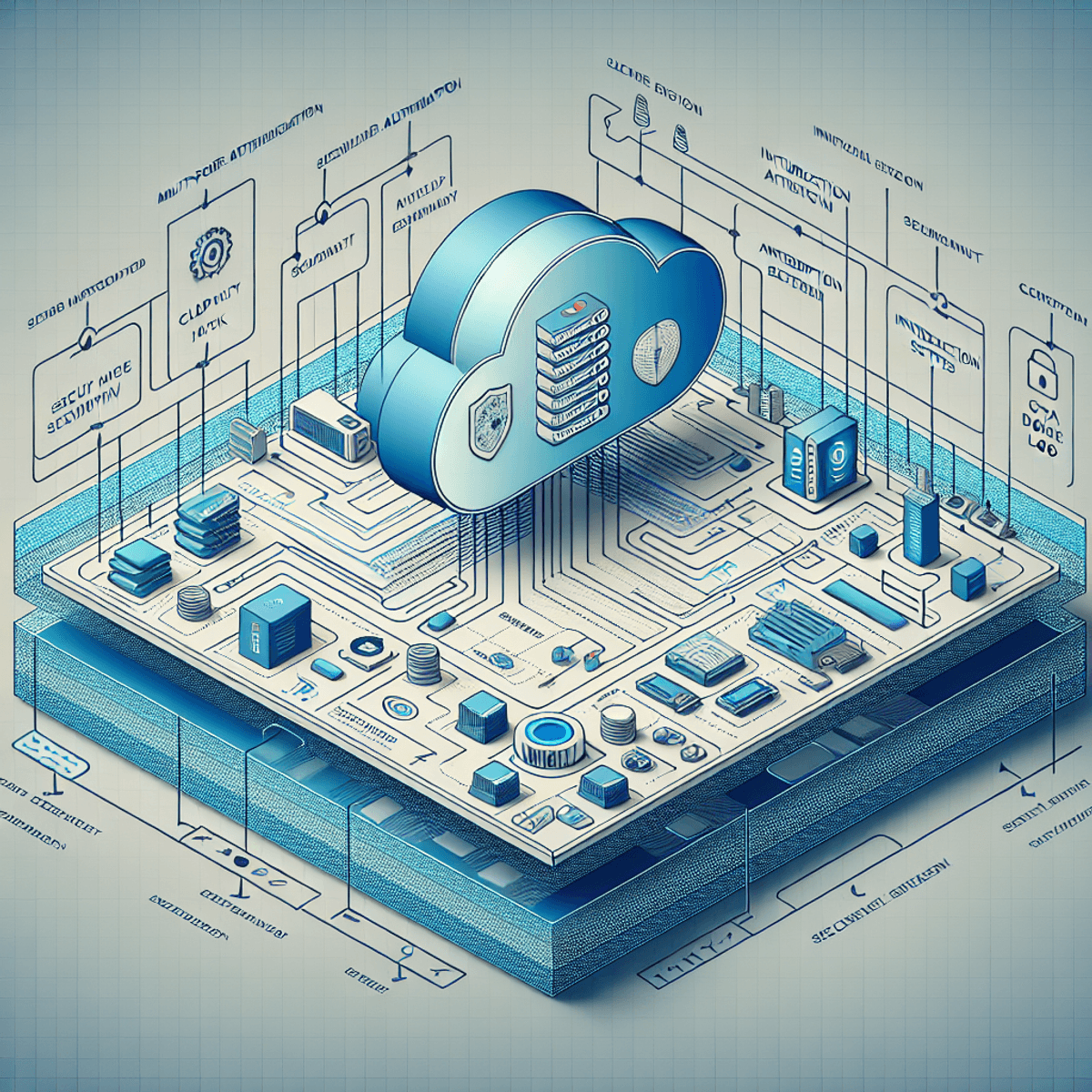 A simple reference architecture: the minimum viable cloud security stack in 2026
This is the “covers most teams” stack. You can implement it with cloud-native tools, third-party tools, or a mix. The key is coverage and ownership, not vendor purity.
Identity
- Central SSO (IdP) with phishing-resistant MFA for admins
- Conditional access or device posture checks where possible
- Privileged access management or just-in-time elevation for admin roles
- Workload identity for services, short-lived tokens
Network
- Default-deny inbound, minimal public endpoints
- Private endpoints for managed services where feasible
- WAF for public web apps, DDoS protection for critical services
- Egress monitoring and some form of control (at least alerting, ideally allowlists for key systems)
- Centralized DNS, DNS logging
Data
- Data classification and discovery
- Encryption at rest and in transit, managed keys where appropriate
- Tight access controls and audit logs
- Immutable backups, isolated backup accounts, regular restore testing
- Targeted DLP for SaaS and object storage
Workloads
- Golden images, immutable builds
- EDR/runtime security for critical workloads
- Container image scanning in CI
- Kubernetes guardrails: RBAC, network policies, admission control, secret handling
Posture and security as code
- CSPM for misconfigurations and exposure
- IaC scanning and policy-as-code in CI/CD
- Drift detection with ticketing integration
Monitoring, detection, response
- Central log pipeline (control plane, identity, network, workloads)
- High-signal detections plus alert routing to on-call
- Automated containment actions for top scenarios
- Incident runbooks and regular tabletop exercises
And one underrated idea that fixes a lot of chaos.
One owner per control. Not “security owns everything”. Not “platform owns everything”. One named owner per control area. Identity owner, network owner, data owner, detection owner. Clear accountability, clear backlog.
Common cloud security mistakes I still see (and the fix for each)

Mistake 1: Treating IAM as a one-time setup
Fix: Just-in-time access, quarterly access reviews, and alert on privilege changes. Also monitor new keys, new role assumptions, new OAuth consents.
Mistake 2: “Private subnet = secure”
Fix: Add egress control, identity-based access, and service-to-service auth. Assume internal traffic can be hostile once an attacker lands.
Mistake 3: Storing secrets in code or CI logs
Fix: Secret manager, short-lived credentials, and secret scanning in CI plus pre-commit hooks. Rotate anything that ever touched a repo.
Mistake 4: Too many alerts, no response muscle
Fix: Fewer detections, higher signal, tied to playbooks. Then practice. Tabletop exercises. Make on-call less miserable.
Mistake 5: Backups you’ve never restored
Fix: Scheduled restore tests and isolated, immutable backup design. If you cannot restore, you do not have backups. You have expensive feelings.
Wrap up: what “good” cloud security looks like in 2026
Good cloud security in 2026 is not a single product or a perfect perimeter. It’s identity-first control, strong data handling, automated guardrails, and real visibility. Plus the ability to contain fast and recover cleanly.
Prioritize the controls that reduce blast radius and speed up containment and recovery. That’s what actually changes outcomes when something goes wrong.
FAQ
1) What is the biggest cloud security risk in 2026?
Identity compromise. Stolen tokens, over-permissioned roles, OAuth abuse, and leaked service credentials cause the most real-world damage because they let attackers operate as legitimate users.
2) Is multi-cloud inherently less secure?
Not inherently, but it increases complexity. The risk usually comes from inconsistent IAM, uneven logging, and different defaults across providers. Standardize landing zones, centralize identity, and normalize logs early.
3) Do we still need a WAF if we use modern auth?
Often yes, for public apps. A WAF helps with common exploit noise, bot mitigation, and buys time during attacks. But it will not fix broken authorization or insecure APIs.
4) What’s the fastest “first win” for a small team?
Lock down admin access with phishing-resistant MFA, remove long-lived keys, centralize control-plane logs, and fix public exposure defaults (storage, security groups, public endpoints). That combo prevents a lot of the worst incidents.
5) How do we balance compliance requirements with real security?
Use compliance as a baseline, not the goal. Map each compliance control to an actual threat and confirm you can detect and respond, not just document. Audits rarely test your incident response speed, but attackers do.
6) Do we need a CSPM tool, or can we do this manually?
In fast environments, manual reviews do not scale. If you have more than a handful of accounts/projects and frequent changes, CSPM plus policy-as-code in CI/CD is usually worth it, even if you start small.
7) What logs matter most for cloud incident response?
Control-plane audit logs, identity provider logs, DNS logs, network flow logs, load balancer logs, and key workload logs. If you can’t rebuild a timeline of who did what and from where, containment and forensics get messy fast.
8) Why does cloud security in 2026 feel harder even if the cloud provider is secure?
Most breaches in 2026 aren’t due to insecure cloud providers like AWS, Azure, or GCP; rather, they stem from misconfigurations, identity sprawl, and weak processes. The complexity introduced by multi-cloud environments, SaaS adoption, remote access, and AI-driven automation increases both speed and potential blast radius of attacks.
9) What is the shared responsibility model in cloud security?
In the shared responsibility model, the cloud provider secures the underlying infrastructure such as physical data centers, hardware, and foundational services. Meanwhile, customers are responsible for securing their data, identities, applications, network configurations, workloads, posture management, monitoring, and incident response within their cloud environment.
10) What are the main components included in ‘cloud security’ according to this discussion?
Cloud security encompasses identity management (IAM), data protection (classification, encryption), network security beyond traditional perimeters, workload and application security, continuous posture assessment, monitoring for anomalies, and effective incident response strategies.
11) Why do classic perimeter-based security approaches fail in modern cloud environments?
Classic perimeter-only thinking breaks down due to ephemeral workloads that spin up and down rapidly, API-first infrastructure that exposes numerous interfaces, and significant east-west traffic inside clouds. Traditional tools like firewalls and antivirus don’t fully address these dynamics; instead, security must be codified as Infrastructure as Code (IaC), continuously evaluated, and enforced with automation.
12) What are the top cloud security threats in 2026 ranked by real-world impact?
The leading threats include identity compromise (stolen tokens, MFA fatigue), misconfiguration exposures (public buckets, overly permissive groups), ransomware targeting backups and storage encryption, software supply chain attacks (CI/CD pipeline compromises), API/control-plane abuse (privilege escalation), and insider risks such as accidental admin access or shadow projects.
13) What practical pillars form a modern cloud security model that actually works now?
A practical modern cloud security model includes six pillars: 1) Identity-first security emphasizing IAM with phishing-resistant MFA and least privilege; 2) Data security with discovery/classification plus encryption and key management; 3) Cloud network security moving beyond perimeter walls to reduce exposure; along with additional pillars covering workload/app security, continuous posture management, monitoring/anomaly detection, and automated incident response—all aimed at prevention, detection, response, and recovery.