
Because on Monday, your Instagram caption is playful and punchy. On Tuesday, your product page reads like a legal document. By Thursday, your email newsletter is weirdly formal, and your blog post is trying to be your friend a little too hard.
And the worst part is, nobody on the team is doing anything “wrong”. It’s just what happens when you have multiple writers, multiple channels, tight deadlines, and a thousand tiny decisions like. Do we say “customers” or “people”? Do we use contractions? Do we joke? Do we use emojis? Do we write like a confident expert or a relatable peer?
That’s why brand voice tools are suddenly not optional for a lot of marketing teams. They’re basically the guardrails. Not to make everything sound like a robot. But to make sure you sound like you. Every time.
In this article, I’m going to walk you through how to use Jasper to keep your marketing consistent. Not in the vague “AI will transform your workflow” way. More like. Here’s what breaks, here’s what Jasper actually helps with, and here’s how to set it up so the output is usable.
Because if you’ve ever pasted something into an AI tool and thought, why does my brand suddenly sound like a SaaS brochure. Yeah. Same.
The real problem: your voice leaks across channels
Most teams don’t have a “brand voice problem”.
They have a scale problem.
One writer can usually keep a consistent tone in their own work. But once you add:
- multiple people writing
- agencies or freelancers
- repurposing (blog to email to LinkedIn to landing page)
- localization
- different formats (short ad copy vs long-form guides)
- and that one exec who rewrites everything at 11:47 PM
… consistency falls apart fast.
And it shows up in subtle ways.
Not just tone. But:
- vocabulary drift (you say “clients” in one place, “customers” in another)
- confidence levels (some pages are bold, others hedge everything)
- formatting habits (long blocks of text vs snappy short paragraphs)
- reading level (you sound simple on social, complicated on the website)
- CTA mismatch (friendly one day, aggressive the next)
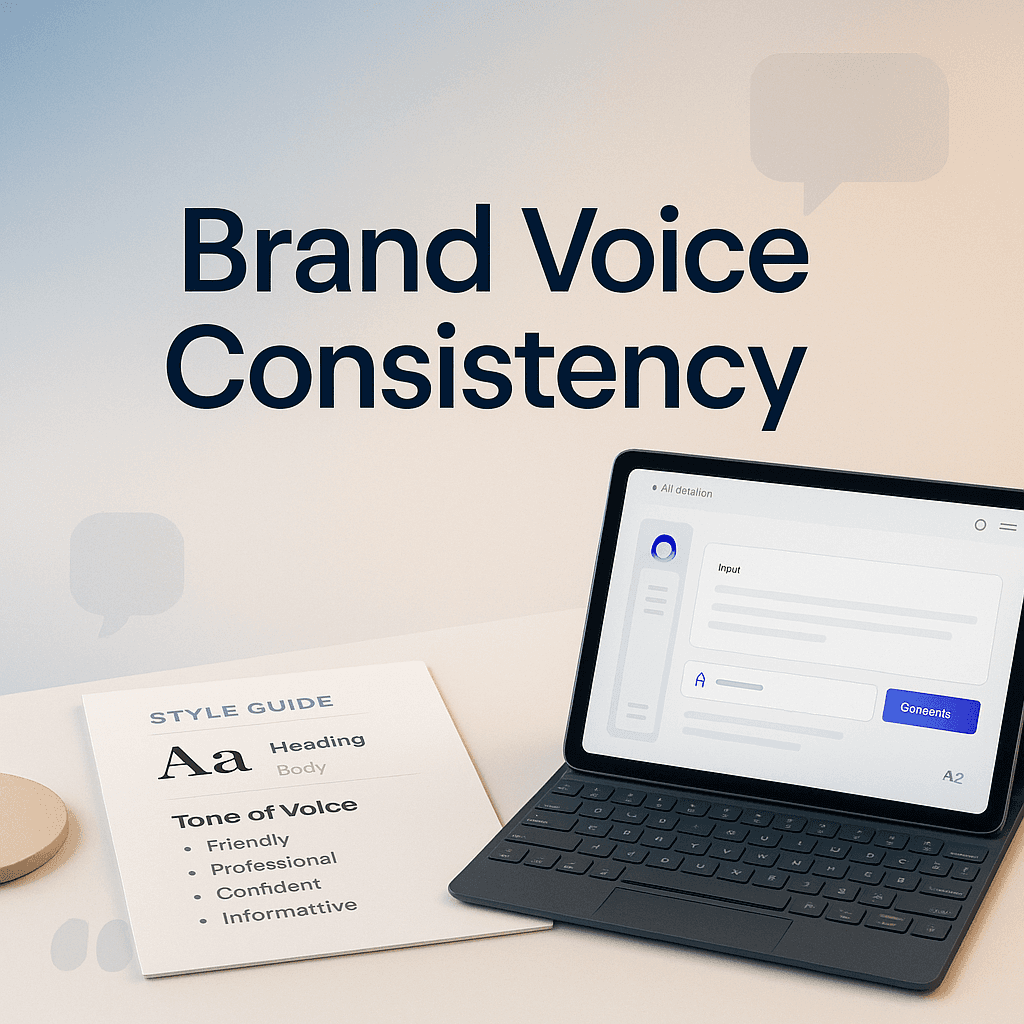
A brand voice guide helps. It really does. But guides are passive. People forget them. Or they interpret them differently. Or they don’t have time to read them when a launch is in 3 hours.
That’s where a tool like Jasper becomes useful. It can act like an always-on “voice layer” that nudges your content back into your lane.
What Jasper is actually good at (and what it is not)
Jasper is one of the better known AI writing tools focused on marketing content. And the big thing it pushes is Brand Voice.
In plain terms, Jasper can learn how your brand writes and then generate new content that matches that style. Or rewrite existing content into that style.
That’s the dream, anyway.
In reality, Jasper is great at:
- producing on-brand first drafts quickly
- rewriting content to match a defined voice
- keeping terminology consistent
- scaling content formats without losing the core vibe
- reducing the “randomness” you get from generic AI outputs
It’s not great at:
- being perfectly accurate without human review
- understanding nuanced brand humor without training
- making strategy decisions (positioning, audience pain points, competitive angle)
- sounding truly original if your inputs are too generic
So yeah. It is not a replacement for a marketer with taste. But it can save a lot of time and reduce chaos.
If your main pain is “our content sounds like five different companies”, Jasper can help.
Before you touch Jasper: clarify your voice in human terms
Here’s the step most people skip.
They open Jasper, click Brand Voice, upload a few samples, and expect magic.
Sometimes it works. Sometimes it doesn’t. And when it doesn’t, they assume the tool is bad.
But most of the time, the inputs were messy.
So before setup, do a quick voice check. Like an actual human.
Ask:
- What are we trying to sound like?
- Not “professional”. That means nothing. More like. Calm and confident. Direct. Warm but not cheesy. Like a senior expert who explains things simply.
- What do we avoid?
- Overhype, jargon, sarcasm, fluff, excessive jokes, overly corporate language, whatever.
- Who are we talking to?
- Founders? Busy marketing managers? Developers? Consumers? This matters because voice changes depending on audience expectations.
- What content already sounds right?
- Pick 3 to 10 pieces that you’d proudly say represent your brand. Not the stuff you published because you had to.
This part is annoying, sure. But if you don’t do it, Jasper learns the wrong patterns. And then you fight the tool instead of using it.
Step 1: Collect “gold standard” writing samples
Jasper’s Brand Voice works best when you feed it strong examples.
Choose content that:
- matches your current brand direction (not outdated)
- is written by someone you trust
- has your best tone, structure, and vocabulary
- includes a mix of formats if possible (blog, landing page, emails)
A solid set might look like:
- 2 landing pages (homepage + product page)
- 2 to 3 blog posts
- 2 emails
- 5 social posts that did well
You don’t need a library. You need quality.
And one thing here. If your “best” content is full of fluff, Jasper will copy that too. So be honest.
Step 2: Set up Brand Voice inside Jasper
Inside Jasper, you’ll create a Brand Voice profile. This is where you define how the AI should sound when generating content for your brand.
The typical setup involves:
- adding a brand name and description
- uploading or pasting writing samples
- optionally defining tone attributes and style rules
What you want to be careful about is conflicting samples.
If one piece is playful and another is formal, Jasper will average them. And you’ll get this weird middle tone that feels like. A friendly corporate memo.
So if you have multiple voices (for example, playful on social but formal in whitepapers), create separate Brand Voices. Seriously. Don’t mash everything into one.
You’ll thank yourself later.
Step 3: Add specific rules. Not vibes
This is where you can make Jasper much more consistent.
Instead of only saying “friendly and professional”, give it rules like:
- Use short paragraphs. 1 to 3 lines max.
- Prefer simple words over jargon.
- Use contractions (we’re, you’ll, it’s).
- Avoid phrases like “unlock”, “leverage”, “game-changing”.
- Use active voice.
- Speak directly to the reader using “you”.
- Don’t overuse exclamation points.
- Don’t sound overly excited.
You can also define brand-specific language:
- Always say “customers”, not “clients”.
- Say “pricing” not “investment”.
- Use “shop” not “buy”.
- Use sentence case in headings.
This kind of stuff seems small. But it’s exactly what creates consistency at scale.
And Jasper is good at following constraints when they’re clear.
Step 4: Use Jasper for rewriting first, not net-new content
If you’re rolling this out to a team, the easiest win is rewriting.
Because most teams already have content. It’s just inconsistent.
Here are a few practical rewrite workflows that work well.
Rewrite ads into a consistent tone
Ad copy is where voice drift gets wild. Especially when multiple people are testing angles.
You can take 10 ad variations and ask Jasper to rewrite them using your Brand Voice, while keeping:
- the same offer
- the same character limits
- the same CTA
This gives you variety without sounding like 10 different brands.
Rewrite website pages that were written at different times
A homepage written in 2022 and a product page written last week often feel like different companies. Jasper can rewrite sections to match your newer voice, without rebuilding everything.
A good approach:
- rewrite the hero section first
- then benefits
- then FAQs
- then CTAs
Piece by piece. Don’t rewrite the whole page in one go unless you like chaos.
Rewrite executive edits back into brand voice
This is a real one.
Sometimes leadership edits copy and suddenly it’s stiff. Or overly formal. Or loaded with internal jargon.
Instead of fighting, you can paste the edited version into Jasper and prompt it like:
“Rewrite this to match our Brand Voice. Keep meaning the same. Remove jargon. Keep it direct.”
It saves time and reduces the emotional energy wasted on copy debates.
Step 5: Build repeatable templates for each channel
Consistency is not just the words. It’s the format.
A brand voice tool works better when you combine voice with structure.
So create templates for your main channels. For example.
Blog post template
- short hook
- clear subheadings
- short paragraphs
- practical examples
- a “what to do next” section
Then tell Jasper to follow that structure every time.
Email template
- one line hook
- short context
- 3 bullet points max
- one CTA
LinkedIn post template
- bold first line
- short story or observation
- 1 insight
- 1 takeaway
- optional question
When you do this, Jasper stops guessing. And you get content that feels like it comes from the same system.
Which it does.
Step 6: Use Jasper to enforce “message consistency” too
People think brand voice is only tone. But messaging is part of it. Like the words you always use, the claims you repeat, the way you position your product.
Jasper can help keep those consistent if you feed it the right reference material.
Create a messaging reference document
Start by building a simple internal doc that includes:
- your value proposition
- your top 5 differentiators
- your “we believe” statements
- approved proof points (metrics, case study highlights)
- approved wording for key features
Add it to your Jasper workflow
Paste that document into your Jasper workflow or include it in prompts as context.
Then every time you generate content, Jasper has a consistent source of truth.
Because otherwise, AI will invent phrasing. And you’ll end up with slightly different claims across pages. Which is not ideal when customers compare.
A practical example prompt you can steal
When you want Jasper to write something new in your Brand Voice, prompts matter. Even with Brand Voice turned on.
Here’s a prompt style that usually produces cleaner output:
Prompt:
“Write a landing page section for [product/feature] in our Brand Voice.
Audience: [who]
Goal: [what you want them to do]
Tone: clear, confident, warm. Not salesy.
Style rules: short paragraphs, simple words, avoid hype, use contractions.
Must include:
- 3 benefits
- 1 short example
- 1 CTA button text (max 4 words)
Details: [insert feature details + proof points]”
That’s it. Not complicated. But it’s structured. It makes the model behave.
How to roll this out to a team without breaking everything
If you’re a solo creator, it’s easy. You just use Jasper.
If you’re a team, you need a light process or you’ll get inconsistent outputs anyway. Just faster.
Here’s a simple rollout that works.
1) Pick one Brand Voice owner
One person owns the Brand Voice profile. They update rules, add samples, and decide when the voice changes.
Without this, everyone tweaks things, and you end up with five “official” voices.
2) Create a short internal “voice cheat sheet”
Even if Jasper exists, humans still write. And humans still edit.
So make a one pager:
- tone words
- words to use and avoid
- sample paragraph that nails the voice
- CTA examples
The tool supports the humans. Not the other way around.
3) Decide where Jasper is mandatory
For example:
- mandatory for ad rewrites
- mandatory for social repurposing
- optional for long-form blog drafts
This avoids forcing the tool into workflows where it’s not needed.
4) Add a QA step
Someone should review for:
- factual accuracy
- brand claims consistency
- compliance requirements (if relevant)
- awkward phrasing that “feels AI”
Brand voice tools reduce effort. They don’t remove responsibility.
Common mistakes people make with Jasper Brand Voice
A few things I see a lot.
They train on mediocre content
If your samples are bland, the output will be bland. Jasper is a mirror.
Pick your best stuff.
They expect Jasper to invent strategy
Jasper can write, rewrite, remix. It won’t figure out your positioning. You need to provide the angle.
They use one voice for every channel
Your support docs do not need to sound like your TikTok captions. Split voices if you need to.
They don’t update the voice over time
Your brand evolves. Your market evolves. Add new samples every few months. Remove old ones that no longer represent you.
So. Is Jasper the best brand voice tool?
It depends on what you mean by best.
If you want a tool that:
- helps you write faster
- keeps your tone more consistent
- reduces editorial back and forth
- makes it easier to scale output without losing your “sound”
Jasper is a strong option.
But the tool is only half the equation.
The real unlock is building a system around it. Clear samples, clear rules, clear messaging references, and a team process that doesn’t treat AI output as final.
Because the goal is not to sound “AI consistent”.
It’s to sound like your brand. Every time someone reads you.
Wrap up
Brand voice consistency is one of those boring marketing disciplines that quietly makes everything work better. Ads convert better because they feel familiar. Emails get more replies because they sound human. Landing pages feel trustworthy because they don’t shift personalities mid scroll.
Jasper can help you get there, especially if you’re juggling a lot of content and a lot of hands in the mix.
Start simple.
Train it on your best samples. Add real rules. Use it to rewrite existing content first. Build templates for the channels you publish on every week. And keep a human in the loop, because you still need taste. And judgment. And someone who notices when a sentence is technically fine but just doesn’t feel like you.
That’s the whole game, really.
FAQs (Frequently Asked Questions)
What causes inconsistency in brand voice across different marketing channels?
Inconsistency in brand voice often arises due to multiple writers, agencies or freelancers, repurposing content across channels, localization, different content formats, and last-minute edits by executives. These factors lead to variations in tone, vocabulary, confidence levels, formatting, reading level, and call-to-action styles.
Why are traditional brand voice guides sometimes insufficient for maintaining consistency?
Traditional brand voice guides are passive tools that teams may forget to consult, interpret differently, or skip when under tight deadlines. This leads to inconsistent application of the brand voice because the guides don’t actively enforce or nudge writers toward a unified style.
How can Jasper help marketing teams maintain a consistent brand voice?
Jasper acts as an always-on ‘voice layer’ that learns your brand’s writing style and generates or rewrites content to match that style. It helps produce on-brand first drafts quickly, keeps terminology consistent, scales content formats without losing the core vibe, and reduces randomness common in generic AI outputs.
What are the limitations of using Jasper for brand voice consistency?
Jasper is not perfect at ensuring complete accuracy without human review, understanding nuanced brand humor without training, making strategic decisions like positioning or audience targeting, or producing truly original content if inputs are too generic. It should complement rather than replace skilled marketers.
What preparatory steps should a team take before setting up Jasper’s Brand Voice feature?
Before setup, teams should clarify their brand voice in human terms by defining what they want to sound like (e.g., calm and confident), what to avoid (e.g., jargon or fluff), who the target audience is (e.g., founders or marketing managers), and selecting 3 to 10 high-quality existing content pieces that exemplify the desired tone and style.
How should writing samples be selected for training Jasper’s Brand Voice profile?
Choose high-quality ‘gold standard’ writing samples that reflect your current brand direction and are authored by trusted writers. Include diverse formats such as landing pages, blog posts, emails, and social media posts that best represent your ideal tone, structure, and vocabulary. Avoid outdated or fluffy content to ensure accurate learning.