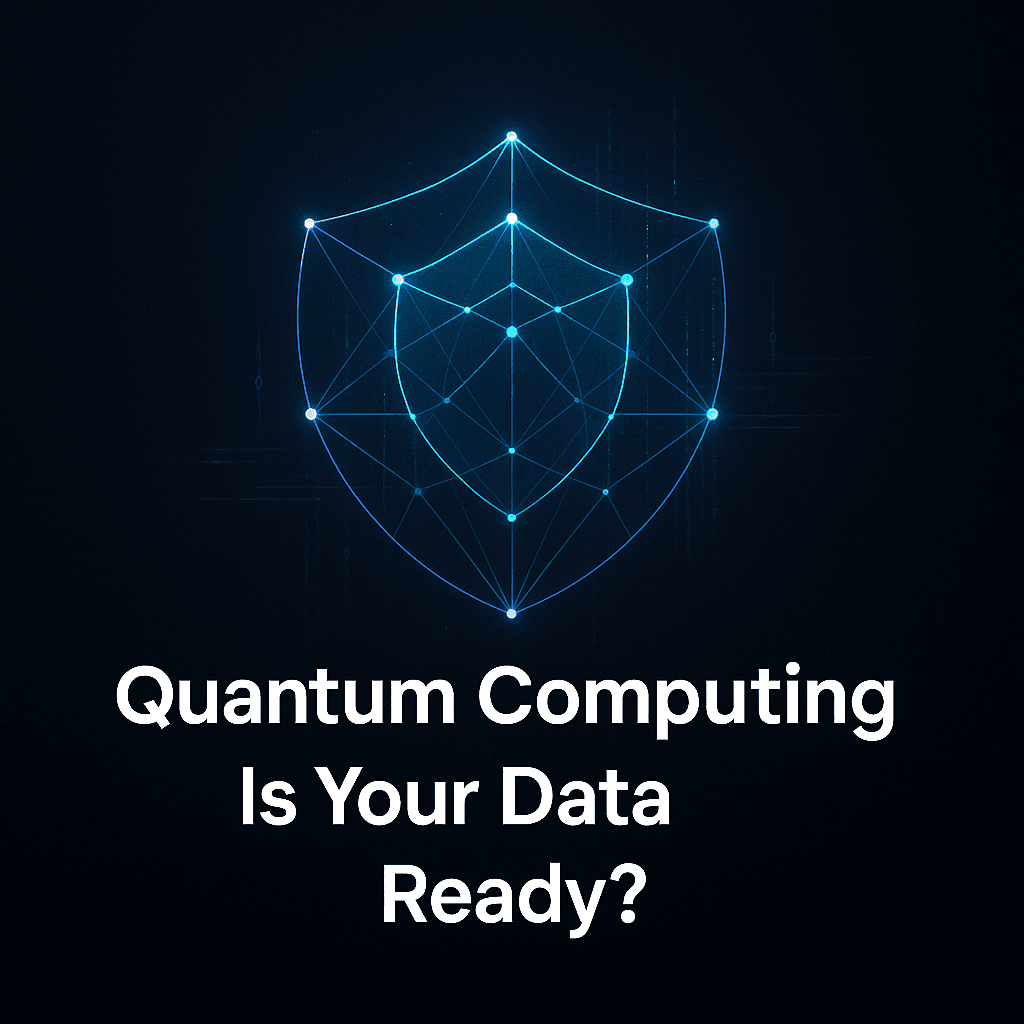

The short version is this. Some of the encryption we use today is like a really good padlock. Hard to pick with normal tools, basically impossible if you are in a hurry. Quantum computers are like giving the lock picker a whole new set of tools that can exploit patterns in a way the old tools cannot.
So the real question is not “Will quantum computers arrive?” It is “When they do, will your sensitive data still be safe?”
Let’s talk about what actually matters, without getting lost in math.
What quantum computing actually is (in plain terms)
A normal computer is like a person flipping a coin and getting either heads or tails. Every calculation is built from lots of tiny yes or no decisions.
A quantum computer is more like spinning the coin on the table. While it is spinning, it is not just heads or tails. It is kind of both, in a useful way, until you stop it and read the result.
That “spinning coin” idea is a simple analogy for a qubit, which is the basic unit of quantum computing. A normal bit is like a light switch. Off or on. A qubit is like a dimmer switch that can hold a blend of states until you measure it.
And when you connect qubits together, they can influence each other in ways that are hard to copy with regular computers. Think of two dice that always land in a coordinated way, even when they are far apart. That is an analogy for entanglement.
This is why quantum computing is exciting. It is not just faster in the normal sense. It can approach certain problems from a totally different angle, like taking a shortcut through a maze instead of walking every hallway.
Why encryption is the real issue, not “speed”
Most business talk about quantum is vague. Faster AI, better predictions, blah blah. Maybe. But the immediate, concrete risk is encryption.
A lot of modern encryption relies on problems that are easy to do one way and painfully hard to reverse. Here is an analogy.
Imagine mixing paint. It is easy to mix blue and yellow to get green. But if I hand you green paint and ask you to figure out the exact original blues and yellows that made it, good luck. That one way difficulty is what makes certain encryption methods safe.
Two big categories show up in real life:
- Public key encryption (used for key exchange, certificates, TLS on websites, email encryption, software signing)
- Symmetric encryption (used for bulk data protection, like encrypting files and databases)
Public key encryption is the one quantum threatens the most.
The scary part: “harvest now, decrypt later”
Even before quantum computers are powerful enough to break today’s public key encryption, attackers can still play a long game.
They can copy encrypted traffic today and store it. Then when quantum tools catch up, they decrypt it later.
It is like recording a locked conversation and waiting until someone invents a universal key. Your conversation felt safe at the time. But it was only safe temporarily.
If you handle data with a long shelf life, this matters a lot:
- Medical records
- Government and legal data
- Financial histories
- Customer identity data
- Trade secrets, formulas, proprietary research
- Anything regulated that must remain confidential for years
If your data needs to stay secret for 10 years, you have to care about what happens in year 7.
What “post quantum cryptography” means, simply
You will hear the phrase post quantum cryptography, or PQC.
Ignore the intimidating name. It just means encryption methods designed to resist quantum attacks.
Analogy wise, it is like replacing a lock design that a future power tool can break, with a different lock design that still holds up even when the tool exists.
Important detail. PQC is not “quantum encryption.” It runs on normal computers. It is just built to survive the quantum era.
What about your passwords and AES and all that?
People often ask, “Will quantum break everything?”
Not exactly.
- Symmetric encryption like AES is more resilient. Quantum gives attackers a speedup, but it is more like they get a faster engine, not a teleportation device. The fix is usually increasing key sizes and following best practices.
- Public key systems like RSA and classic elliptic curve cryptography are the bigger concern. Those are the ones widely expected to become vulnerable when quantum computers reach a certain capability.
If that sounded too technical, here is the simple version.
Symmetric encryption is like two people sharing the same secret key to open a box. Quantum makes it somewhat easier to try lots of keys quickly, so you respond by making the key longer and harder to guess.
Public key encryption is like a public lock box where anyone can drop a message in, but only you can open it. Quantum threatens the “only you can open it” part for common lock box designs used today.
So… is your data ready?
Most organizations are not even sure where they use encryption, which sounds ridiculous until you look closely.
Encryption is everywhere. Web servers, VPNs, internal service to service connections, backups, endpoints, mobile apps, third party SaaS tools, identity providers, code signing pipelines. It sprawls.
Readiness is less about buying a magic quantum product, and more about doing boring inventory work now so you are not panicking later.
Here is what “ready” looks like in practice.
Step 1: Make a simple map of where encryption lives
You do not need a perfect spreadsheet with 900 rows on day one. You need a usable view.
Start with these questions:
- Where do we use TLS certificates? Websites, APIs, internal services?
- What VPN and remote access tools do we use?
- How are backups encrypted, and with what keys?
- What databases encrypt data at rest?
- What devices store sensitive data locally?
- What SaaS vendors hold our sensitive data, and how do they encrypt it?
- What code signing or firmware signing do we do?
Analogy. This is like figuring out how many doors your building has before you decide how to upgrade the locks.
Step 2: Classify data by how long it must stay secret
Not all data is equal.
Make a simple list:
- Must remain confidential for 1 year
- 5 years
- 10+ years
Quantum risk is mostly a long term issue, which is exactly why it is easy to ignore. But if you have long lived secrets, you cannot ignore it.
Step 3: Check for “crypto agility” (can you swap algorithms without a rewrite?)
Crypto agility is a fancy term. The analogy is just “Do your locks use standard screws?”
If changing encryption requires rewriting half your app, you are not agile. If it is a configuration change, a library update, and a certificate rotation, you are much closer.
Some things to look for:
- Are you using modern, maintained crypto libraries?
- Are algorithms hard coded in apps or configurable?
- Are certificates and keys rotated regularly already?
- Can your systems support hybrid approaches, where you use old and new methods together during a transition?
Step 4: Follow standards, not hype
The safest path here is boring, and that is good.
National standards bodies and security researchers are already selecting and testing PQC algorithms for real world use. You do not want to be the company that picks a random new algorithm because a vendor sounded confident.
If you do nothing else, do this. Track the PQC roadmap from reputable standards groups, and track what your major vendors are doing (cloud providers, CDNs, identity vendors, VPN providers, hardware security module vendors).
Step 5: Pressure test your vendors now
If you rely on vendors, you are only as ready as they are.
Ask them:
- What is your plan for post quantum cryptography?
- Do you have a timeline for PQC support in TLS, VPN, certificates, key management?
- Will you support hybrid key exchanges during migration?
- How will you handle certificate lifecycles and rotation at scale?
This is not being paranoid. It is basic procurement hygiene for the next decade.
Common mistakes I keep seeing
“We will wait until it is urgent”
By the time it is urgent, you will be rotating keys, swapping libraries, reissuing certs, updating devices, and negotiating vendor timelines all at once. It will be a mess.
“Quantum is not real yet, so we are safe”
The harvest now, decrypt later strategy makes that logic shaky. Your 2026 data breach can start with 2024 traffic captures.
“We just need a quantum firewall or something”
There is no single product that fixes this. This is mostly a migration and governance problem, like the move from HTTP to HTTPS. Tools help, but planning matters more.
A practical readiness checklist (the short one)
If you want something you can actually use in a meeting:
- Identify systems using RSA or elliptic curve cryptography in key exchange, certificates, signing.
- List sensitive datasets that must remain secret for 10+ years.
- Confirm your ability to rotate keys and certificates quickly.
- Remove outdated crypto libraries and protocols.
- Require a PQC roadmap from major vendors.
- Start a small internal pilot when your infrastructure providers support PQC or hybrid modes.
The real takeaway
Quantum computing is not going to “break the internet” overnight. But it is going to force a slow, global lock replacement project.
The organizations that do fine are the ones that start early, quietly, and methodically. Inventory. Classify. Make systems easier to update. Push vendors. Stay close to standards.
Because when quantum finally stops being a headline and starts being a capability, the worst place to be is still figuring out where your locks are.
FAQs (Frequently Asked Questions)
What is quantum computing in simple terms?
Quantum computing is a type of computing that uses quantum bits or qubits, which can exist in multiple states simultaneously, unlike traditional bits that are either 0 or 1. This allows quantum computers to process complex problems more efficiently by leveraging phenomena like superposition and entanglement.
How does quantum computing threaten current encryption methods?
Quantum computers can exploit mathematical patterns in encryption algorithms that are currently considered secure, especially public key encryption like RSA and elliptic curve cryptography. This means they could potentially break these encryptions much faster than classical computers, putting sensitive data at risk.
What is ‘harvest now, decrypt later’ and why is it concerning?
‘Harvest now, decrypt later’ refers to attackers capturing encrypted data today and storing it until quantum computers become powerful enough to decrypt it. This poses a serious risk for data that needs long-term confidentiality, such as medical records, government files, financial information, and trade secrets.
What does post-quantum cryptography (PQC) mean?
Post-quantum cryptography refers to new encryption methods designed to withstand attacks from quantum computers. PQC algorithms run on classical computers but use mathematical principles that make them resistant to the capabilities of quantum decryption tools.
Will quantum computing break all types of encryption like AES and passwords?
Not exactly. Symmetric encryption methods like AES are more resilient against quantum attacks; the main impact is the need for longer keys to maintain security. However, public key systems such as RSA are more vulnerable and expected to be compromised when sufficiently powerful quantum computers become available.
How can organizations prepare their data for the arrival of quantum computing threats?
Organizations should start by mapping out where and how they use encryption across their systems—including TLS certificates, VPNs, backups, databases, and devices storing sensitive data. Understanding this landscape allows them to plan for adopting post-quantum cryptography solutions and strengthen their overall data security before quantum threats materialize.