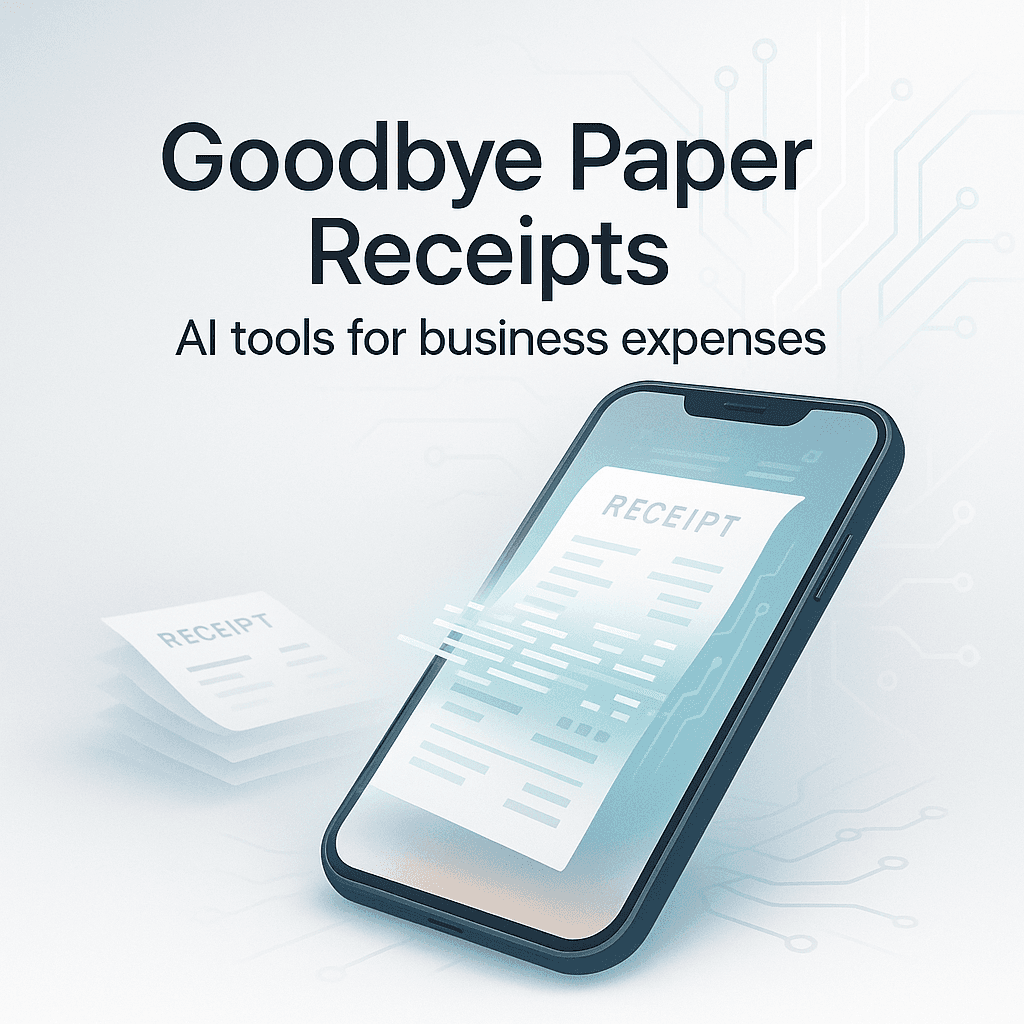

You buy something. You get the little paper slip. You shove it in your wallet. It turns into confetti after a few weeks. Then one random Tuesday you need it. For taxes, for reimbursement, for “hey can you prove this wasn’t a personal expense?”
And suddenly you are digging through a drawer like you lost your passport.
But the real problem is not the paper. It’s the time.
The switching. The forgetting. The double entry. The “I’ll do it later” lie we all tell ourselves, and then later becomes a nightmare spreadsheet.
The good news is that expense tracking has quietly gotten way better in the last couple of years. Not just “scan receipts” better. I mean tools that read the receipt, categorize it, detect duplicates, match it to a card transaction, push it into your accounting system, flag weird stuff, and basically do the boring parts without you hovering over it.
And yeah, a lot of them now market it as AI. Some of that is hype. Some of it is real.
This post is the real part.
The messy truth about business expenses
Here’s what most people actually need, whether you’re a freelancer or you run a team.
- Capture receipts fast. Like two seconds fast.
- Auto extract the important fields. Merchant, date, tax, total, currency.
- Auto categorize, but also learn your preferences over time.
- Match receipts to transactions so you stop guessing.
- Sync to accounting. QuickBooks, Xero, NetSuite, whatever you live in.
- Handle reimbursements without a hundred back and forth emails.
- Give you clean reports, and audit trails that do not collapse under pressure.
If a tool can do those things consistently, it becomes one of those boring business upgrades that feels small, and then three months later you can’t imagine going back.
Alright. Let’s talk tools.
1. Expensify
Expensify has been around forever, which is usually a red flag in software. But in this case it’s more like… they’ve seen every expense workflow mess imaginable.
The core reason people pick Expensify is simple: it’s built around capturing receipts and reimbursing people quickly, with as little manual work as possible.
What it does well:
- SmartScan receipt capture that pulls key details automatically.
- Corporate card support, so transactions come in clean.
- Easy approvals and reimbursements.
- Solid integrations with QuickBooks, Xero, NetSuite, Sage, and others.
Where the “AI” part actually shows up is in the automation. It’s not trying to be flashy. It’s trying to remove steps. Receipt comes in, details extracted, category suggested, policy checks applied, submitted, approved.
If you have a team, that last part matters. You don’t want “receipt scanning”. You want “stop bothering me with this”.
Best for: teams that need a proven expense system with approvals and reimbursements.
Watch outs: depending on your plan, costs can creep. Also, some people find the experience a little opinionated, like it wants you to do things the Expensify way. Which is fine. Until it isn’t.
2. Ramp
Ramp is basically the modern combo meal: corporate cards plus expense management plus automated controls.
And it’s good. Like, surprisingly good.
Ramp is built for businesses that want to control spending while also making expense reporting almost disappear. If you’ve ever managed a team where everyone uses different cards and you only find out what happened after the fact, Ramp is the opposite of that.
Strong points:
- Smart corporate cards with built in controls and merchant restrictions.
- Receipt matching that nudges employees when a receipt is missing.
- Auto categorization and rules. It learns.
- Great reporting, especially for vendors and recurring spend.
- Integrations with QuickBooks, NetSuite, Xero, and more.
Ramp’s “AI” angle is usually around automation and insights. The system tries to reduce the need for manual review by catching issues early. Missing receipt. Duplicate charge. Suspicious transaction. Out of policy.
It also does a good job making finance feel less like a cleanup crew.
Best for: startups and growing companies that want corporate cards plus clean expense workflows.
Watch outs: Ramp is not the best fit if you want a lightweight receipt scanner only. It’s a platform. You adopt it, or you don’t.
3. Brex
Brex is in a similar category to Ramp, but it’s often chosen by companies that want more than expense tracking. Think cards, spend limits, travel, approvals, and stronger control across departments.
Where Brex shines is in the policies and automation. The spend controls can be very granular. And if you do any meaningful travel spending, Brex tends to be in the conversation.
What it does well:
- Company cards plus expense management.
- Fast receipt capture and matching.
- Policy based approvals.
- Travel and spend management in one place for many teams.
- Strong integrations, especially for scaling finance stacks.
If you are tired of chasing receipts and also tired of retroactive enforcement, Brex is built to prevent the mess in the first place.
Best for: companies that need spend controls across teams, and want card plus expenses plus travel.
Watch outs: qualification and pricing can vary depending on business profile. Also, it’s a bigger switch than “just install an app”.
4. Zoho Expense
Zoho Expense is one of those tools that quietly does a lot, especially if you are already in the Zoho ecosystem. And even if you’re not, it’s still a strong standalone option.
It covers the basics really well, and it’s often more budget friendly than the big spend platforms.
Highlights:
- Receipt scanning with OCR extraction.
- Mileage tracking.
- Per diem support.
- Multi currency support.
- Approval flows and policy rules.
- Integrations with Zoho Books, QuickBooks, and other tools.
The “AI” experience here is mostly around smart extraction and automation rules. It’s not trying to reinvent expense tracking. It’s trying to make it reliable, and affordable, and less annoying.
Best for: small businesses that want a full expense system without enterprise pricing.
Watch outs: if you want the “corporate card plus everything” experience, Zoho is more traditional. Not worse. Just different.
5. QuickBooks Online + built in receipt capture
If you’re already living in QuickBooks, sometimes the best tool is the one you already pay for.
QuickBooks Online has receipt capture features that let you snap receipts, extract info, and match them to transactions. For very small teams, this can be enough.
What works:
- No extra platform to adopt.
- Receipts can attach directly to transactions.
- Good for keeping books tidy, especially at tax time.
- Works well if you have a simple expense workflow.
This is not the fanciest AI system. But it’s practical. And for a lot of solo operators, practical beats fancy.
Best for: freelancers and very small businesses already on QuickBooks that want a simple “good enough” workflow.
Watch outs: if you need approvals, reimbursements, strict policies, or heavy travel management, QuickBooks alone can feel thin.
6. Dext (formerly Receipt Bank)
Dext is a serious player in the “capture and extract” world. Accountants love it because it reduces bookkeeping time. Business owners like it because it turns a pile of receipts into something structured without a fight.
Dext is not trying to be your corporate card. It’s trying to be the best pipeline from documents to clean accounting entries.
What it does well:
- Very strong OCR and data extraction from receipts and invoices.
- Supplier rules and automation.
- Clean publishing to accounting systems like Xero and QuickBooks.
- Works well for high volume receipt processing.
If you deal with a lot of vendor invoices, not just coffee receipts, Dext starts making more sense. It’s built for bookkeeping speed.
Best for: businesses and accounting firms that want top tier data extraction and publishing into accounting software.
Watch outs: it’s not a full spend management suite. It’s the capture and processing layer. Which might be exactly what you want.
7. SAP Concur
Concur is the big enterprise answer. If you’ve worked in a large company, you’ve probably fought with Concur at least once. Or maybe it fought with you.
But here’s the thing. Concur is huge because it handles huge. Travel bookings, expense policies, global compliance, audits, approvals across departments, the whole corporate machine.
What Concur is good at:
- Enterprise grade travel and expense management.
- Deep policy enforcement and audit trails.
- Global capabilities.
- Integrations with ERP systems in bigger orgs.
The “AI” improvements in this category tend to be about better receipt capture, better auditing, and better compliance automation. Less manual review. More catching issues before they become expensive.
Best for: mid market to enterprise companies with complex travel and compliance needs.
Watch outs: implementation can be heavy. User experience is not always loved. It’s powerful, but it’s not cozy.
8. FreshBooks (for service businesses who invoice)
FreshBooks is not primarily an expense AI tool. It’s more like an invoicing first platform that also does expenses well enough for service businesses.
If your world is clients, projects, invoices, and then expenses are just part of the picture, FreshBooks is a clean option.
Good stuff:
- Capture receipts and track expenses.
- Categorize and mark as billable.
- Link expenses to client projects.
- Simple reports, good for small teams.
The “AI” label is not the headline here. The headline is that it keeps your money story in one place, and that can reduce the overall mess.
Best for: freelancers and small agencies that want invoicing plus basic expense tracking.
Watch outs: if you want strict policies, reimbursements, complex approvals. You’ll want a dedicated expenses tool.
What to look for when choosing an “AI expense tool”
This is the part most lists skip. They just throw tools at you and hope something sticks.
Here’s the checklist I actually use.
1. Does it match receipts to transactions automatically?
Receipt scanning is nice. Matching is the real time saver.
If the tool can pull in card transactions and then attach the right receipt, you cut manual work by a lot. Especially on a team.
2. Can it handle your reimbursement style?
Some companies reimburse weekly. Some monthly. Some never reimburse because everyone uses company cards.
Pick the tool that matches reality, not the one that assumes you have perfect processes.
3. Will your accountant hate it?
This sounds like a joke but it’s not.
Your accountant cares about clean categories, attached documentation, consistent vendor names, and exports that don’t break. If your “AI tool” makes accounting harder, you will pay for it later.
4. Does it learn your categories and rules?
True automation is not “it suggests stuff”. It’s “it stops suggesting the same wrong stuff after you correct it a few times”.
Look for rules, vendor mapping, and behavior that improves.
5. How annoying is receipt capture for employees?
If it’s annoying, people won’t do it. Then your system collapses.
The best setups are the ones where missing receipts trigger a nudge, and the employee can fix it in 10 seconds.
Simple recommendations, depending on your situation
If you just want the quick version, here you go.
- Solo freelancer on QuickBooks: start with QuickBooks receipt capture. Upgrade later if you outgrow it.
- Small business that wants a full expense system on a budget: Zoho Expense.
- High volume receipts and bookkeeping focused workflow: Dext.
- Growing company that wants corporate cards plus automation: Ramp or Brex.
- Enterprise travel and compliance heavy org: SAP Concur.
- Service business that lives in invoicing and projects: FreshBooks.
A practical “goodbye paper receipts” workflow that actually sticks
This is what I’d set up if I was starting from scratch.
- Use one card system if possible
- Corporate cards (Ramp or Brex) for teams, or a single dedicated business card for solo operators. The fewer cards, the fewer mysteries.
- Make receipt capture immediate
- Snap it in the parking lot. Or forward the email receipt right away. Don’t wait.
- Turn on auto matching and nudges
- Missing receipts should be a notification, not a monthly scavenger hunt.
- Lock down categories with rules
- Vendor based rules are everything. Starbucks is not “Office Supplies”. Your tool should learn that fast.
- Sync to accounting weekly, not yearly
- Weekly is boring. And boring is good. Yearly is chaos.
That’s it. Not complicated. Just consistent.
Let’s wrap up
Paper receipts are not just inconvenient, they’re a tax time trap and a time drain. The best AI powered expense tools don’t magically make spending cleaner. They make the admin disappear, and they make your records actually trustworthy.
If you want one move that fixes 80 percent of the pain, pick a tool that does receipt capture plus transaction matching plus accounting sync. Then make it the default, not a “we should start doing this” initiative that dies next month.
Goodbye paper receipts. For real this time.
FAQs (Frequently Asked Questions)
Why is managing business receipts traditionally so challenging?
Managing business receipts is challenging because it involves time-consuming tasks like digging through piles of paper, switching between systems, forgetting to record expenses, double data entry, and procrastination that leads to chaotic spreadsheets. The real problem lies in the time and effort required rather than the physical paper itself.
What features should a good expense tracking tool have for businesses?
A good expense tracking tool should capture receipts quickly (within seconds), automatically extract key details like merchant, date, tax, total, and currency, auto-categorize expenses while learning user preferences over time, match receipts to card transactions to eliminate guesswork, sync seamlessly with accounting software like QuickBooks or Xero, handle reimbursements efficiently without excessive emails, and provide clean reports along with reliable audit trails.
How does Expensify simplify expense management for teams?
Expensify simplifies expense management by offering SmartScan receipt capture that automatically pulls key details, supporting corporate cards for clean transaction import, enabling easy approvals and reimbursements, and integrating well with popular accounting systems like QuickBooks and NetSuite. Its automation minimizes manual steps by extracting details, suggesting categories, applying policy checks, and streamlining submission and approval processes—making it ideal for teams needing proven expense workflows.
What makes Ramp a strong choice for startups and growing companies?
Ramp combines corporate cards with expense management and automated spending controls to help businesses control spending proactively. It offers smart cards with built-in restrictions, receipt matching that prompts employees when receipts are missing, auto-categorization with learning capabilities, insightful reporting on vendors and recurring spend, plus integrations with accounting platforms. Ramp reduces manual reviews by catching issues early such as duplicates or policy violations—great for startups wanting streamlined card usage and expense workflows.
In what ways does Brex cater to companies needing comprehensive spend control?
Brex provides company cards coupled with robust expense management features including fast receipt capture and matching. It emphasizes granular policy-based approvals and integrates travel spend management alongside general expenses. Brex helps prevent spending messes before they happen by enforcing controls across departments in real-time. It’s ideal for companies seeking an all-in-one platform for card management, expenses, travel oversight, and scalable finance stack integrations.
Is Zoho Expense a good option outside the Zoho ecosystem?
Yes. While Zoho Expense integrates seamlessly within the Zoho ecosystem, it also stands as a strong standalone expense management tool. It covers essential features effectively—such as receipt capture and reporting—and tends to be more budget-friendly compared to larger competitors. This makes it a viable choice for businesses looking for comprehensive yet cost-conscious expense tracking solutions.